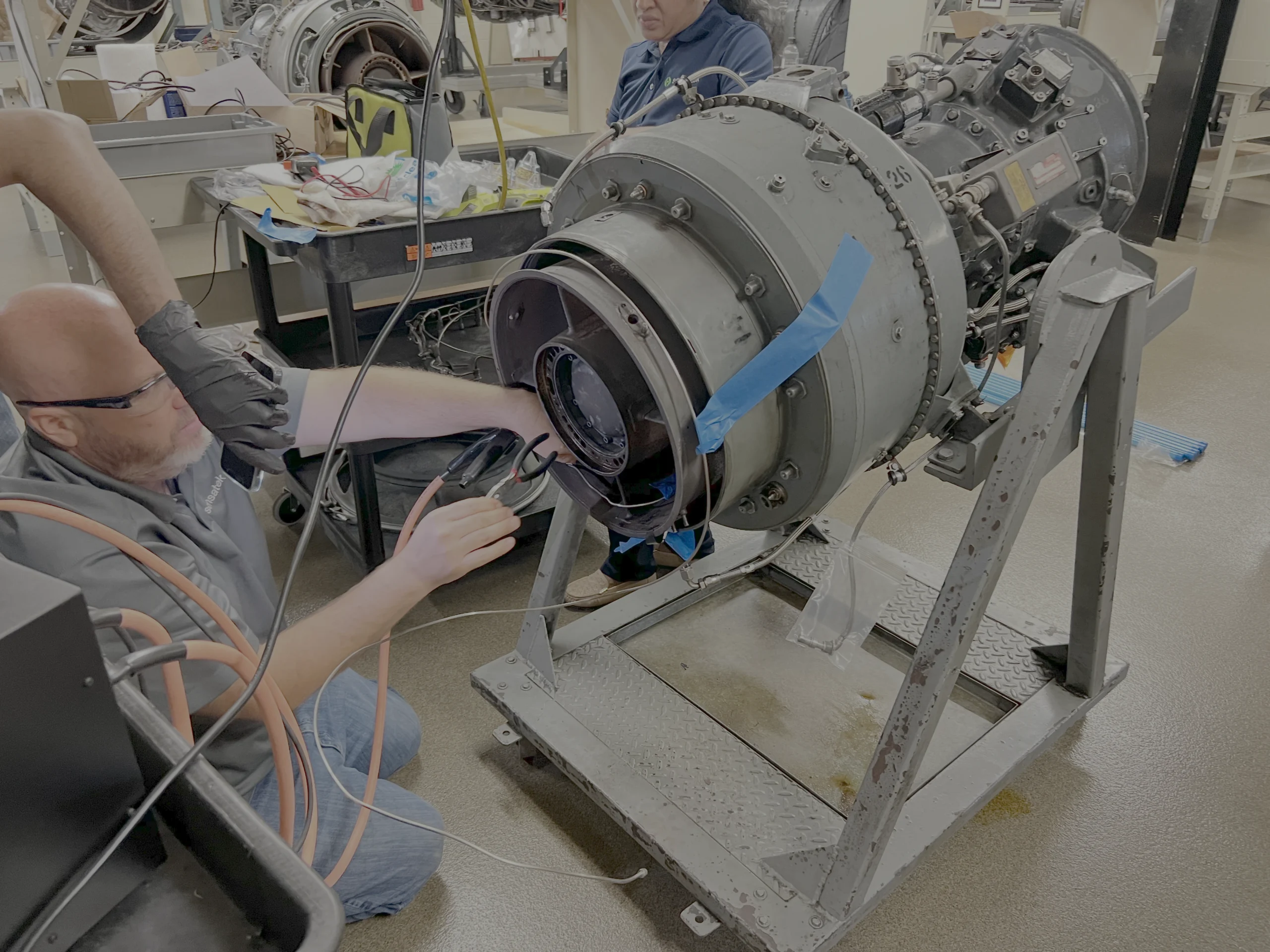
Turbine blades in gas turbines operate under extreme conditions, temperatures exceeding 850°C, rotation speeds over 16,000 RPM, and g-forces of 45,000g. Traditional wired sensors can’t withstand this environment and pose significant limitations in cost, data latency, and maintenance downtime.
Gas turbine OEMs and owners needed a non-intrusive, real-time, and survivable monitoring solution for turbine blade temperature and structural strain during engine operation.
Innovation
Sensatek developed and successfully tested a wireless passive RF sensor system using polymer-derived ceramics (PDCs). The system comprises:
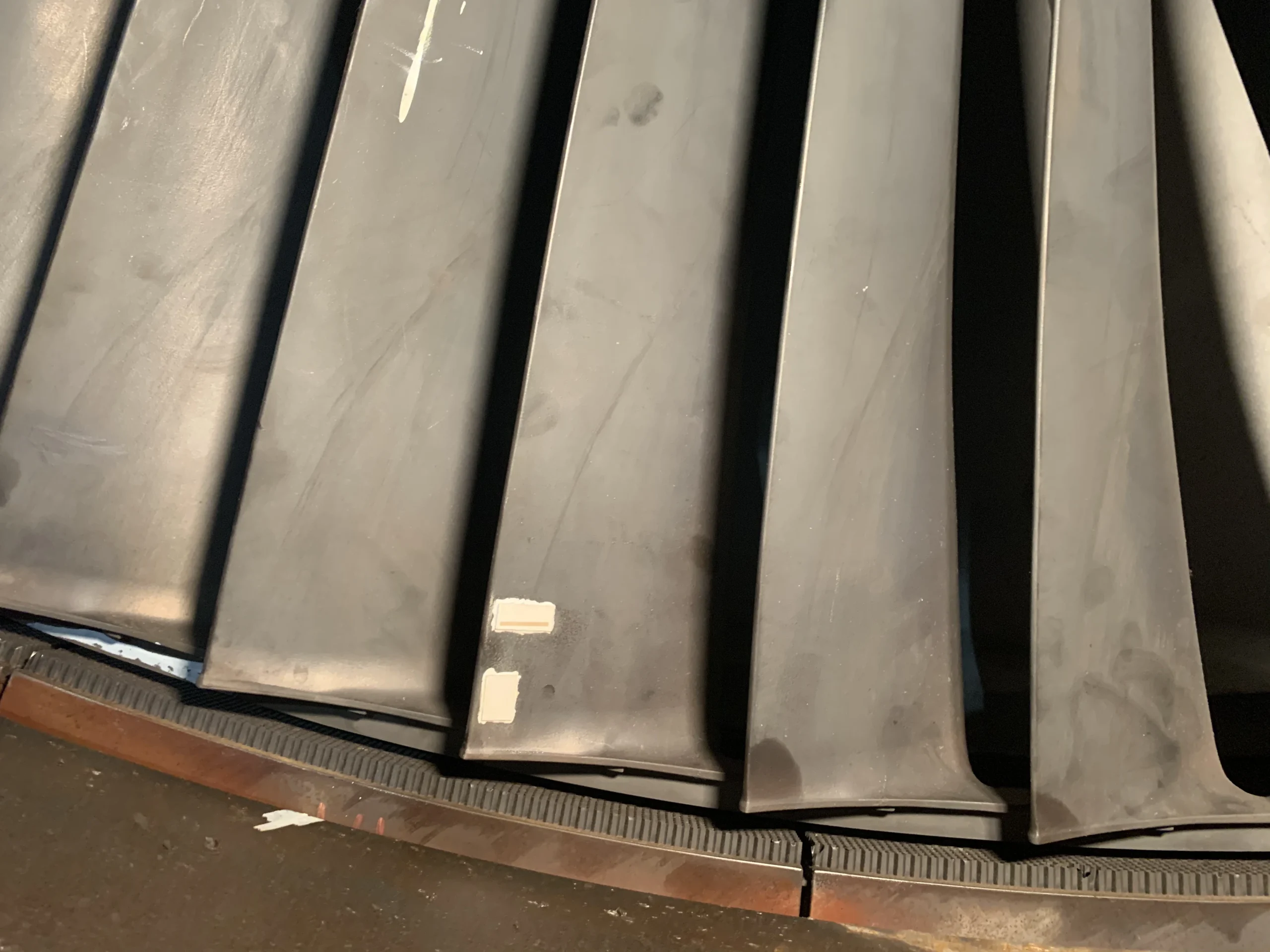
Passive wireless sensors bonded directly onto gas turbine blades
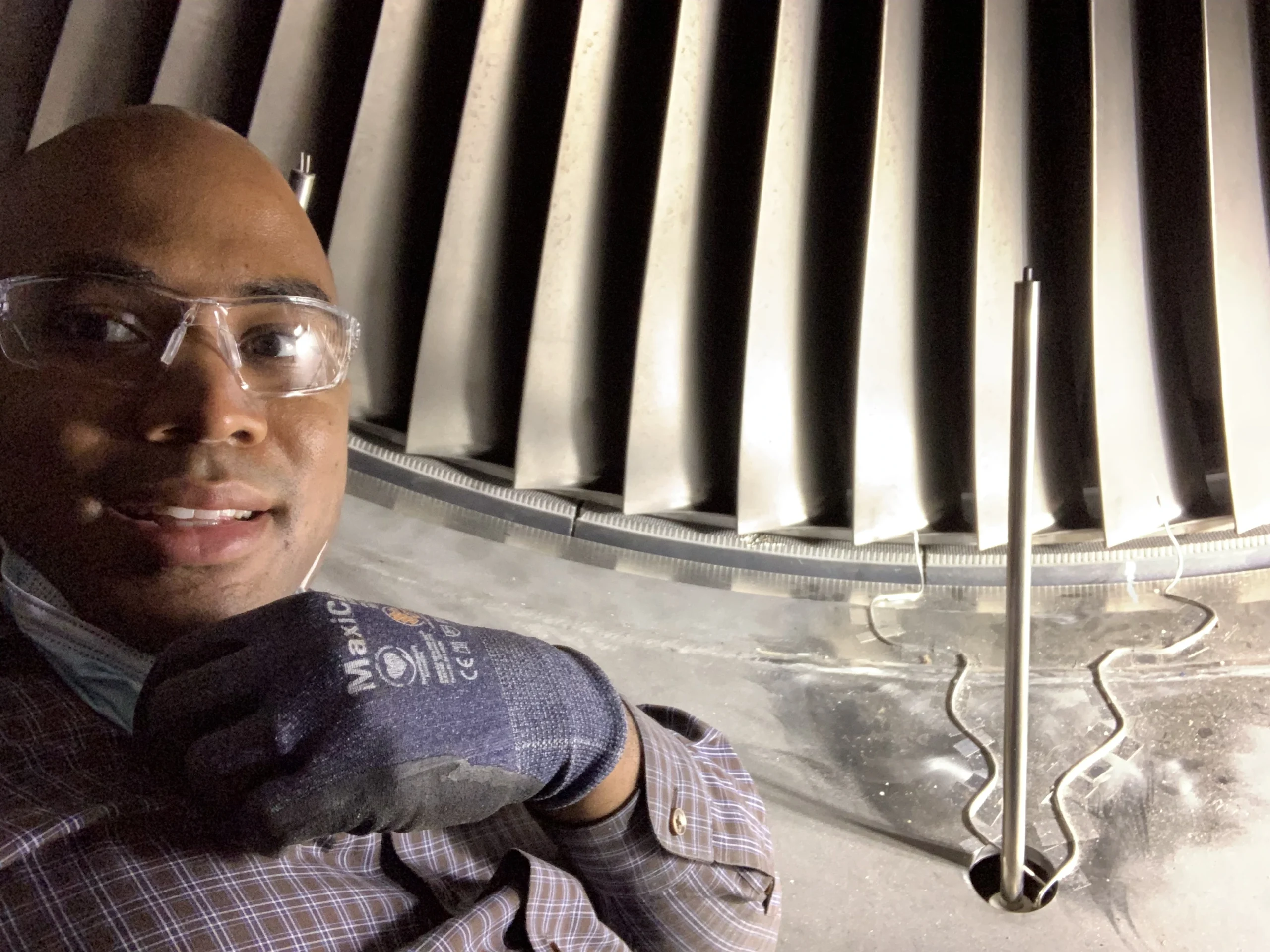
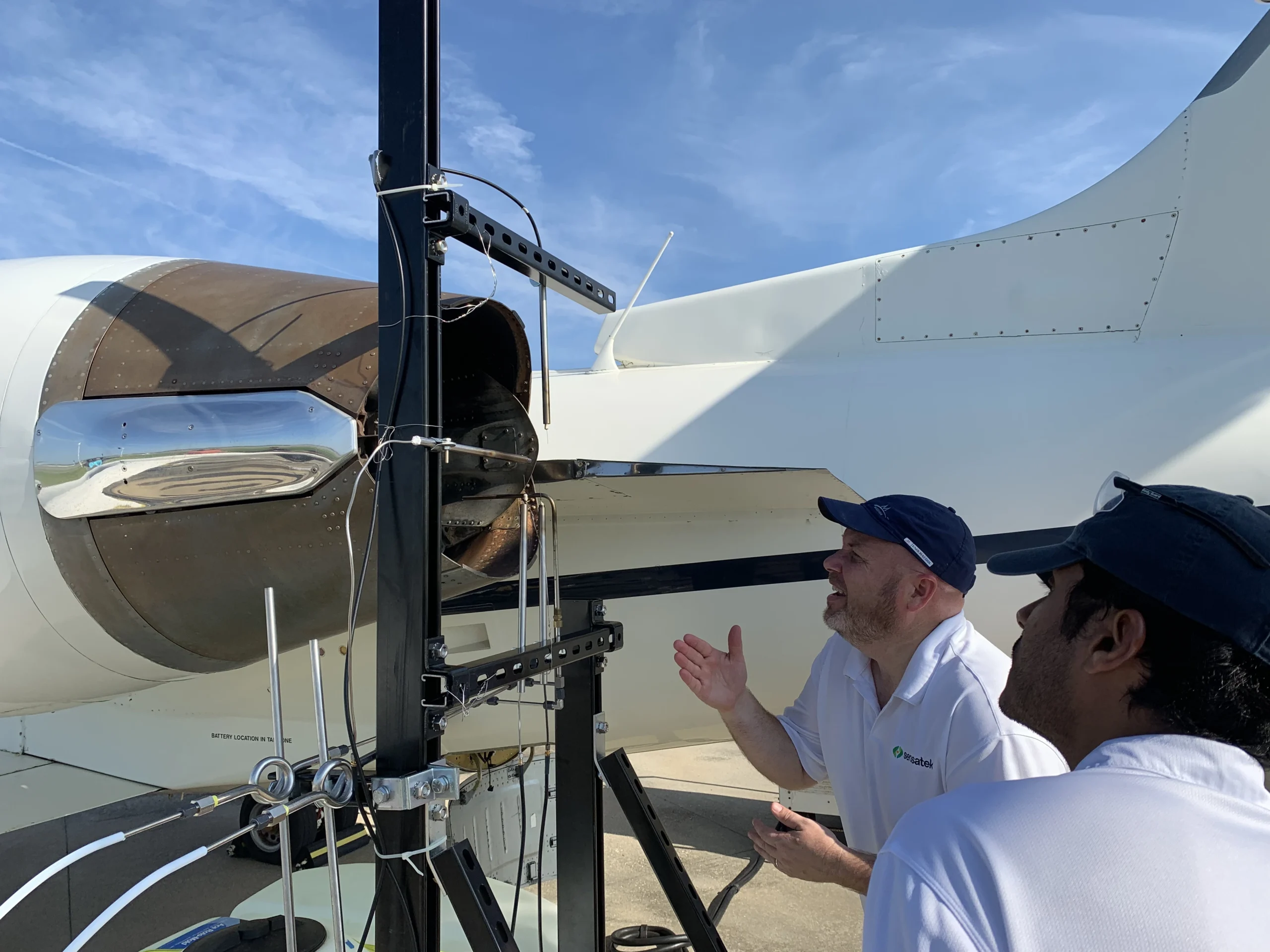
High-temperature antennas used to communicate via non-contact signal capture
Real-time data acquisition via Sensatek's proprietary Turbotrack software
This system reads the temperature from rotating blades up to 1,070°C, withstanding high-speed rotation and vibration without requiring a slip ring or external cooling.
Commercialization Services Delivered
End-to-End System Design & Engineering:
Developed, tested, and refined full sensing chain—sensor, antenna, signal conditioning, and software GUI.
Testing & Validation under Real Conditions:
System delivered and demonstrated on gas turbines by leading OEMs.
Dual-Use Readiness:
Sensors and software were customized for both defense (e.g., T53, J85 engines) and commercial aerospace/energy turbines (e.g., Siemens, GE, Rolls-Royce gas turbines).
Outcomes
Sensatek developed and successfully tested a wireless passive RF sensor system using polymer-derived ceramics (PDCs) and platinum metallization. The system comprises:
Exceeded sensor survivability and precision goals at >850°C and 16,000 RPM
Demonstrated real-time monitoring capability without engine disassembly
Validated over 10 key technical parameters including vibration resistance, software GUI performance, and multi-sensor interrogation
Filed multiple patents for RF-based sensing in harsh environments
Created a path for scalable production using flame-spray deposition for curved turbine blade integration
Impact Statement
“Sensatek’s breakthrough in passive wireless temperature sensing for rotating engine parts gives the Air Force a mission-ready, high-temperature sensing solution. With full system integration and real-time analytics, this technology sets the stage for predictive maintenance and autonomous engine health monitoring.”